 Our Company
Coronavirus and CTR

As your news feeds have been inundated with the latest information on coronavirus these past few months, Chicago Textile Recycling wanted to share with you where we fit in and what we are doing to “do our part” during this pandemic.

Cleaning Out and Donating Textiles
If you follow us on Facebook or Twitter, you have seen our posts about social distancing and sheltering in place being a great time to clean out closets, dressers, shoes, and more…but we have also shared that it is not a great time to take those to resale stores and CTR bins.
The reason for this is because we too are attempting to follow state and federal orders for social distancing. What this means for our company is not furthering transmission of coronavirus through donation pick ups at bins, resale stores and other companies that have partnerships with us. There is so much information that is still being learned about the spread of this virus and one of those unknowns is the longevity of life the virus has on clothes, cardboard, plastic and other materials. In order to protect our company employees, we are doing all that we can to keep them healthy and out of overcrowded hospitals.
We appreciate each of you as our recyclers helping us as we try to do our part in keeping everyone safe. Feel free to clean out and spring clean, but please set aside your donations in your attic, garage or closets until the country is able to get back on its feet once this pandemic has passed. Most or all resale stores are also closed at this time and not accepting donations, so please keep donatable textiles at home.
Our Parent Company Wipeco, Inc
As we have mentioned in previous blogs and posts on social media, Chicago Textile Recycling is under the parent company of Wipeco, Inc., which supplies cloth wipers, cleaning products and a wide range of janitorial supplies to companies and programs around the Midwest. Wipeco sells hand sanitizer, toilet paper, and disinfectant to customers such as city bus systems and healthcare facilities, and right now is prioritizing these customers due to their need to remain open and stocked as essential workers.
Wipeco is having all non-essential employees such as their sales team working from home to reduce the risk of spread at this time. Here are some other changes we have implemented to help keep our employees safe and our customers safe:
- We have streamlined and stopped offering nonessential recycling services.
- Truck drivers no longer have access to our warehouse.
- We have increased surface wiping, hand washing and social distancing practices for our remaining employees.
- We have modified our office & warehouse hours to be 8:00am-4:00pm M-F.
In addition to these safety changes, Wipeco has also needed to add some policy changes effective due to the pandemic including adjusted shipping and packing policies. Both of our companies are working very hard to fill essential demand for care workers in Chicago and the greater Chicagoland area as well as do everything we can to keep our employees safe.

What You Can Do
Now that you know our part in this pandemic, here are some ideas on ways you can do your part in keeping others safe and helping all small companies, schools, and places of gathering get back to normal sooner rather than later…
Social Distance
Many of our social media posts of late have reflected and reaffirmed our need to social distance. This is vital to stop the spread of this virus and is of paramount importance for flattening the curve and being able to open places back up.
Wash Your Hands
The easiest and quickest way that this virus spreads is through direct contact touch with others who have the virus or from surfaces touched by those carrying the virus. Because coronavirus takes upto 5 days to display symptoms, thorough and constant handwashing is absolutely necessary to stop the spread.
Shelter in Place
The governor of Illinois has given the order to shelter in place for anyone who is not an essential employee. This is a necessary step to being able to move on from this pandemic more quickly. We at CTR and Wipeco are only completing the tasks that are absolutely essential in our office and warehouse and working all other tasks from our homes right now. We ask that you do your part in doing the same so that we all can return to gatherings and workplaces and outings sooner rather than later. And so that we can work together to save lives of those at higher risk for this virus.
We so appreciate the patience of our customers at this time and we also appreciate the help of our customers, recyclers and followers in helping to keep everyone safe.
For any questions, please contact us.


 Amongst those who took the survey, the room most likely to get deep cleaned was the bathroom: “46% reported that the bathroom was the room they most likely chose to ‘deep clean’.” As you clean the bathroom this Spring, remember to declutter as well. Check the drawers and closets in your bathroom to assess which towels and washcloths no longer get used or absorb as they should. Check also your beach towel stash for the summer ahead and recycle any beach towels that you no longer need or use. Lastly, If you are looking to give your bathroom an inexpensive makeover, also remember to recycle your cloth shower curtain. For information about recycling bins and partner stores nearest to you, please
  The second most likely room to be deep cleaned (with 36%) according to the survey was the kitchen. This is usually comprised of pulling ovens and refrigerators out to sweep underneath or behind, deep cleaning the oven and fridge, sinks and stovetops, and mopping or scrubbing floors. As you complete these tedious but necessary tasks, look around at the textiles in this room also and see what needs to be recycled. Kitchen towels, non-vinyl tablecloths, table runners, cloth placemats and oven mitts at times will need an overhaul, and when they do, remember to recycle these items and do not throw them away.
 The next room most likely (10%) to be deep cleaned this spring is the living room. Although we do not accept pillows or rugs, we do accept pillow covers, sofa covers, drapes or curtains, and blankets that you may find in your living room. Even if it is tattered, stained or contains holes, please donate it so that we can best decide how to give it another life elsewhere. For where to donate your rugs, carpets or pillows, check out our previous blog about
  From those surveyed, seven percent answered they deep cleaned bedrooms as well during spring cleaning. Bedrooms are where the majority of textiles can be found in your home as bedding and clothes constitute the majority of what we own in textiles. As you move your bed aside to vacuum underneath and dust dressers and bookshelves, take the time to declutter as well in your spring cleaning and clean out your closets, dressers and excess bedding. No matter how you go about the process, it will feel good to go through and assess what you already own, what you may need, what no longer fits or is no longer in good shape to wear and recycle those items you’ve realized are not getting worn.
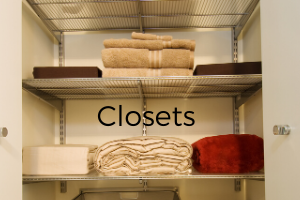 One area of your home not mentioned by those who took the survey but equally important in cleaning out this season are your closets, such as linen closets, hall closets, and front closets. At Chicago Textile Recycling, we accept sheets, bedspreads, jackets, coats, scarves, hats, mittens, and quilts in addition to those items mentioned above such as handbags and backpacks. All of these items may be ones only found in extra closets around the house, so be sure to clean these out as well before making a trip to the donation bin or resale store.
  Twenty-two percent of survey respondents cited decluttering as their primary reason for spring cleaning each year. If you are a part of that 22%, or even if you aren’t, try decluttering as a part of your spring cleaning this year and see if living with less reduces anxiety and makes you feel better in the space where you live. “Women’s stress levels are directly proportional to the amount of stuff in their homes.” I have found this to be true in my home. I feel more relaxed when there are less piles on each tabletop and when things are put away in their proper place. According to the National Soap and Detergent Association, “getting rid of clutter eliminates 40% of housework in the average home.” Who wouldn’t want less housework?!