 Recycling Process
Recycled Textiles: Where Do They Go? Part 1 –…
Have you ever wondered what happens when you drop off bags of old clothes and textiles at your local textile recycling bin? What do textile recycling companies do with your clothes? What about stained and ripped clothes? Do they shred them all for rags or donate some to resale stores? Where do they wind up next? This post is all about the journey recycled textiles take once they leave your home.
If you find yourself donating to resale stores rather than bins, check out Part 2 of this series that discusses the journey your textiles take at resale stores.
First Stop – Textile Recycling Bin
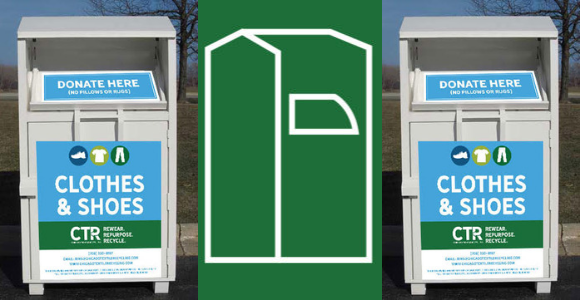
You’ve cleaned out your closet and your dresser, checked your linen shelves for sheets and towels that are no longer needed, and looked in the bottom of your closet for shoes that no longer fit or fit your style. After you have collected what you can and gathered them into shopping bags, boxes, or garbage bags, you drop them off at the nearest textile recycling bin so someone else can enjoy them. The driver then swings by on his route and cleans out the bin. And then what?
Looking for your nearest donation bin? Contact us!
Second Stop – Consolidating Warehouse
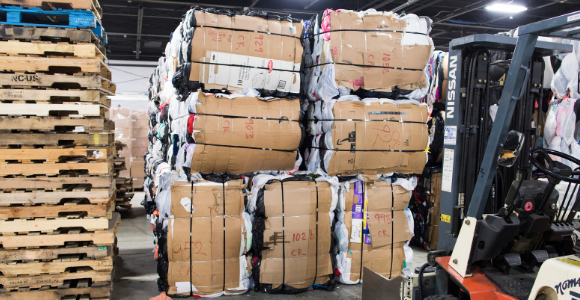
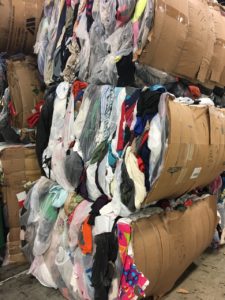
The driver delivers the collected textiles back to our company, Chicago Textile Recycling, which is a consolidating warehouse. At CTR, we consolidate the collected textiles into 1,000 lb bales and prepare them for shipment to a grader, which can be domestic or abroad. Volume is key in recycling as there needs to be enough similar type items for reuse or recycling to be viable. Collecting the maximum volume of textiles prior to shipping helps to reduce our carbon footprint and the cost of freight.
Third Stop – Sort and Grade
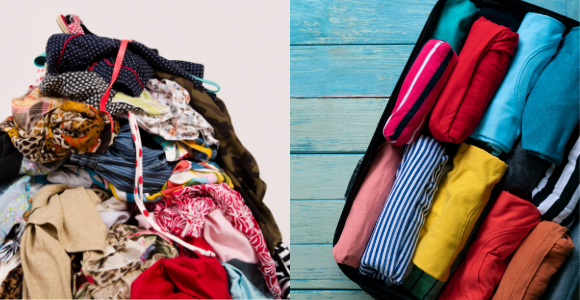
The next stop for your recycled textiles is to ship them to graders. Graders are located in the U.S., Canada or even overseas. For Chicago Textile Recycling, which is a member of Secondary Materials and Recycled Textiles (S.M.A.R.T.), the next steps are to “sort and grade the used clothing based on quality, condition, and type. Once sorted the used clothing and textiles are reused and recycled in one of the following manners.” (quoted from S.M.A.R.T. Press Kit)
Fourth and Final Stop (Option 1) – Reuse
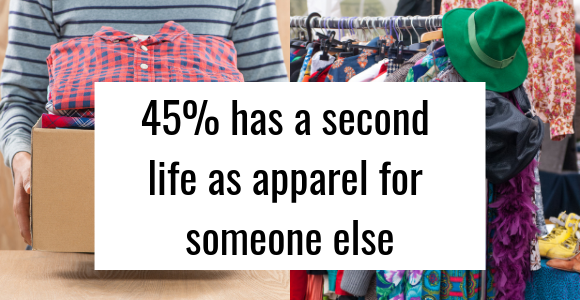
If the clothing is still wearable, it makes the most sense and has the lowest carbon footprint for these items to remain as is and be reworn. Almost half of your donated textiles are sold in the U.S. to resale stores or are exported to other countries where quality secondhand clothing is in high demand. Elizabeth Cline, author of “The Conscious Closet: The Revolutionary Guide to Looking Good While Doing Good”, estimates that “the equivalent of 1.7 billion garments are exported out of the United States every year,” the majority of which will be sold as clothing. (quoted from the article below) Cline expounds, “the so-called developing world has become a bigger and bigger market for the clothes that we no longer want.” Due to this demand, Chicago Textile Recycling and other consolidators sells those items graded as wearable to buyers overseas and also domestically for reuse.
There are multiple benefits to exporting wearable clothing for reuse. Not only does this provide affordable, high-quality clothing to those in need, but S.M.A.R.T. also discusses the benefits of shipping secondhand clothing overseas, sharing that this industry “is lauded by many, including Oxfam, an international aid organization. Oxfam points out, it ‘supports the livelihood of hundreds of thousands of people in developing countries who work in trading, distributing, repairing, restyling, washing, etc.’ International trade is a critical component of the textile industry’s success. More than 60% of recovered textile waste is sent abroad to more than 100 countries, equating to more than 1.4 billion pounds of used clothing – creating hundreds of thousands of jobs worldwide.”
Fourth and Final Stop (Option 2) – Wiping Rags
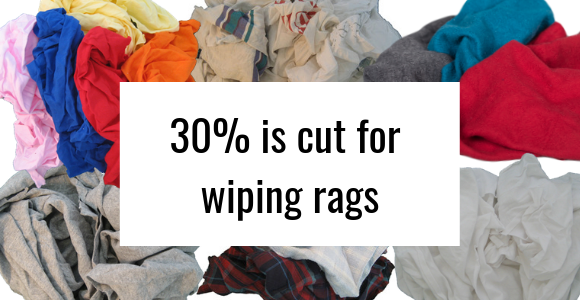
Clothing that is not wearable, out of fashion or slightly stained or torn but made of absorbent materials can be cut into wiping rags. Nearly a third of recycled textiles are cut into wiping rags or polishing cloths then resold to janitorial, automotive, industrial, or manufacturing industries. Items such as t-shirts, sweatshirts, jeans and towels are very effective for making wiping rags.
This is especially pertinent to CTR because our parent company, Wipeco, Inc. does this very thing. We have “2 hands” in the recycling industry because of this. Wipeco, Inc is a distributor of wiping cloths, so we see first hand the benefits of recycled textiles going back into use in a multitude of settings.
Fourth and Final Stop (Option 3) – Reprocessing
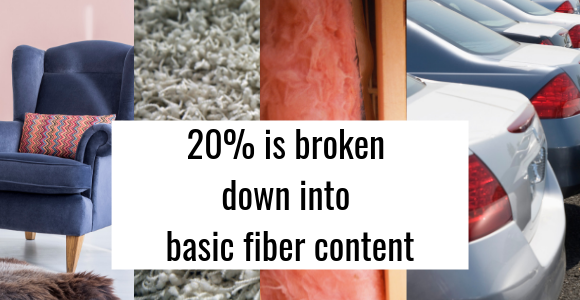
For textiles that are not wearable but also non-absorbent, fiber recycling may be their final step. These recycled textiles are reprocessed and then repurposed for things such as:
- Furniture stuffing
- Carpet padding
- Home insulation
- Upholstery
- Building materials
- Automobile sound-proofing
- Various other products
Each of these potential uses of repurposed textiles are handled by different industry members that specialize in that particular reprocessing and repurposing. This is not a one stop shop for the end of textile recycling, but involves many employees at many companies that care about the environment and textiles and reducing landfill waste.
Fourth and Final Stop (Option 4) – Landfill

Some textiles that are donated to bins come wet, moldy or contaminated with solvents and are thus deemed unusable and unfit for recycling. These items must be thrown away and end up in landfills. That is why it is so important to clean and thoroughly dry your textiles before donating them. It’s also important to donate in plastic bags so that if others donate things that are wet, moldy, or contaminated, those items will not leak into the rest of the bin.
However, everything does and will have an end of life at some point. Extremely worn items with weak or damaged fibers cannot be recycled. Also, as mentioned above, items that are moldy or contaminated cannot be recycled either. When you face the difficult task of throwing away a textile at its end of life, you can choose to make the transition easier by following the method Marie Kondo teaches in her book and now in her show…thank the item for the life it gave you, and let it go.
Textile Recycling and Our Planet

Finally, donating to a bin is an important step toward reducing waste in landfills and taking care of our planet. Even clothes you are unsure of donating due to wear and stains, it is best to donate regardless and allow the consolidating warehouses to make that call of the item’s usefulness in the recycling process. That beloved stained band t-shirt with a small hole in the front may one day be inside your neighbor’s new couch, or that new minivan you are wanting to buy. When in doubt, donate and help create a better future for all of us.
Elizabeth Cline quotes taken from this article
Numerous facts of the recycled textiles process and a few quotes were taken from the Secondary Materials and Recycled Textiles press kit